
Resilience
Supply chain resilience in a more unpredictable world
What prolonged disruption is teaching businesses about resilience, reliability and trust, and why communication increasingly matters as much as coordination.
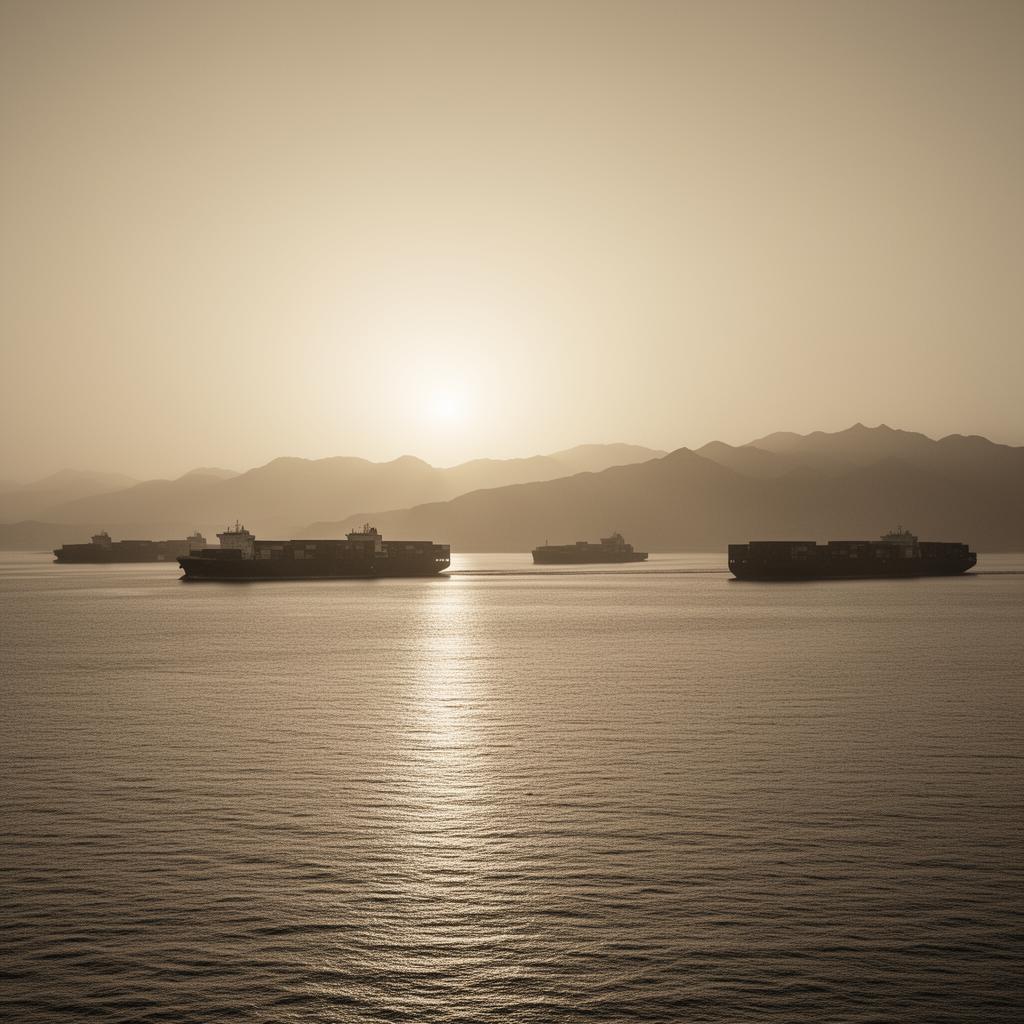
Supply chains have always faced disruption. What is changing is the assumption that stability will simply return.
For generations, global trade has adapted to wars, economic shocks, labour shortages and shifting trade routes. Goods moved, businesses adjusted, and markets found new ways forward.
Today, disruption feels less like an interruption and more like an operating condition. That shift is forcing organisations to rethink resilience. Not only in how they source, move and deliver goods, but also in how they maintain confidence when conditions change. Because when operations come under pressure, trust can quickly follow.
Increasingly, resilience is being measured through more than logistics and contingency plans. It is also reflected in how clearly organisations explain change, manage expectations and communicate uncertainty without creating unnecessary alarm.
For a long time, supply chains operated on a simple assumption that things would largely work as planned. Goods moved, timelines held, and costs were relatively predictable. Businesses focused on efficiency, speed and keeping operations lean. When a disruption happened, it was usually seen as temporary. A problem to solve, not a condition to expect.
Yet disruption itself is hardly new. For generations, businesses have navigated wars, financial crises, labour shortages, natural disasters and sudden shifts in trade routes. Through it all, trade kept moving. Sometimes more slowly, sometimes at a higher cost, sometimes through entirely different routes, but it moved. Businesses have also adapted, like they always do.
Recent disruption to maritime routes provides a useful example of this shift. Much of the conversation has understandably focused on freight costs, rerouting, schedules and delivery windows. Shipping is, after all, a physical business. When routes change, the operational consequences are immediate and measurable.
But prolonged disruption tests more than routes. It also tests resilience. How quickly can organisations adapt? How visible are risks across the supply chain? How dependent are businesses on one route, one supplier or one operating assumption? And perhaps most importantly, how well do organisations maintain confidence when conditions become less predictable?
These are no longer theoretical questions. They are operational realities.
Quietly, many businesses are changing course because uncertainty, while uncomfortable, is manageable. Some are diversifying suppliers. Others are regionalising operations, reassessing inventory levels or building more flexibility into planning. In some cases, companies are accepting slightly higher costs in exchange for something that suddenly feels far more valuable: reliability.
Customers, partners and stakeholders are often more understanding than businesses assume. Most people recognise that delays happen and conditions change, but what really frustrates them is inconsistency, silence, or the feeling that nobody is on top of the issue.
“In prolonged disruption, communication works best when it is built into the operating model from the start.”
When schedules come under pressure, the difference between confidence and frustration often lies in the quality of the update rather than the speed of the resolution. That is where resilience becomes more than an operational exercise. It becomes a business one.
The organisations that handle this period best will combine operational discipline with clearer, earlier and more human communication. In most complex industries, resilience is measured by the path a company chooses and the confidence it maintains as conditions keep shifting.
The organisations navigating this period best are rarely the loudest and clearest. They adapt early, explain change honestly and maintain confidence without overstating certainty.
In shipping, as in most industries, resilience is not measured only by the route a company takes. It is measured by how well it continues to move when conditions no longer behave as planned. Perhaps the biggest shift is this: businesses used to ask, how efficient is our supply chain? The question now has changed to how resilient is it when stability can no longer be assumed?
That subtle change in thinking may prove more important than any disruption itself. Companies that continue to treat communication mainly as public relations will find it harder to explain nuance when customers, employees and commercial partners are looking for clarity.
What customers need in prolonged disruptions
In disruption, the temptation is often to either overexplain or undercommunicate. Both create problems. The useful middle ground is practical, timely information that helps customers make decisions. This includes the expected impact on schedules, the level of uncertainty in those estimates, what is being monitored and when the next update will come.
A well-managed update gives customers three things: visibility, confidence and options. Visibility helps them understand what has changed. Confidence comes from knowing that the organisation is following a controlled process. Options help customers adapt their own planning before pressure builds elsewhere in the chain.
- Clear updates written in plain business language.
- Regular customer advisories with defined timing, rather than occasional reactive messages.
- Simple explanations of what is known, what is still uncertain and what is being done.
- Consistent talking points across commercial, operations and customer service teams.
- Scenario-based guidance for major customers who need to adjust inventory or delivery planning.
The goal is targeted clarity, reducing confusion at the exact point where confusion becomes expensive.
The human factor needs more visibility
The most overlooked impact of prolonged disruption is often the human one. In the maritime industry, for example, extended voyages place additional pressure on crews, schedulers, operations teams, customer service teams, and managers who coordinate multiple moving parts under changing conditions. When voyages become longer and planning cycles become less predictable, the pressure on people rises.
From a communications perspective, this should be handled carefully. The human dimension deserves respect, precision and restraint rather than emotive messaging or promotional storytelling.
There is a credible way to communicate the human dimension. Organisations can talk about crew welfare protocols, internal coordination, training, scheduling discipline and the role of experienced teams in maintaining continuity. This allows companies to show responsibility without exaggeration.
Internal communication is now part of resilience
In moments of prolonged operational pressure, internal communication matters as much as external messaging. Employees often hear customer concerns before leadership teams do. Frontline teams are expected to provide answers while decisions are still moving. Commercial teams need confidence in what they can say. Operations teams need to know that their reality is understood by the wider business.
This makes internal alignment essential. A company cannot communicate clearly outside the organisation if the inside is relying on scattered updates, informal escalation or inconsistent interpretations of the same situation.
Strong internal communication works when it is regular, practical and connected to decision-making. The most useful internal updates answer simple questions: what changed, what stays the same, who owns the next decision and what should teams tell customers now.
Leadership visibility also matters. During a prolonged disruption, silence can easily be misread as distance. Even brief, factual leadership communication can help teams feel anchored. The tone should be calm, operational and realistic. Employees generally do not expect perfect certainty. They do expect to feel that leadership is present and paying attention.
The brand story is shifting from scale to reliability
In periods of uncertainty, reliability becomes more than an operational claim. It becomes a brand proof point. Customers want to know who can continue to coordinate, inform and adapt when conditions are difficult. Investors and partners look for evidence of resilience alongside ambition. Employees want to be part of organisations that act with structure rather than noise.
This shifts the content agenda for brands. The strongest organisations should be able to communicate how they plan, monitor, support customers, protect people, and make decisions when conditions change.
The point is to avoid turning every challenge into a marketing campaign. The brand narrative should reflect the reality of the business. A company that communicates resilience must demonstrate it through its operations, people, processes and customer experience.
What maritime organisations should do now
For companies affected directly or indirectly by ongoing disruptions, the communication response should be structured around practical action rather than broad statements.
- 1Build a single source of truth. All operational updates should originate from a single approved internal source. This reduces contradictions among sales, customer service, operations, and leadership communication.
- 2Create tiered customer messages. Not every customer needs the same amount of information. Major accounts may require detailed scenario planning. Smaller customers may need concise advisories and clear next steps. Segmentation improves usefulness and avoids overwhelming people with irrelevant detail.
- 3Prepare spokesperson guidance. Leadership, commercial heads and customer-facing teams should have approved language for the disruption, including what to say, what to avoid and how to explain uncertainty without sounding evasive.
- 4Bring employee communication into the plan. Internal audiences deserve a defined place in the plan. Employees need consistent updates, escalation clarity and acknowledgement of workload pressure. This is particularly important when operational teams are carrying out the practical consequences of disruption for months at a time.
- 5Use owned channels with discipline. Company websites, LinkedIn pages, customer portals, email advisories and executive posts should carry consistent messages. Owned channels should be used to inform and reassure, with no need to dramatise. The tone should remain factual and commercially useful.
A balanced view is important
An objective opinion piece should avoid overstating the issue. Many organisations have strong operational systems and experienced teams that know how to adapt.
The difference today is the duration and visibility of the disruption. A short interruption can be managed through exception handling. A prolonged disruption requires a more mature communication rhythm. The longer uncertainty persists, the more important it becomes to maintain trust through consistency and speed.
Sensitivity matters here. Communication should stay clear of political framing, speculative commentary or language that places blame. For companies operating across international markets, the safest and most credible approach is to focus on commercial impact, operational resilience, customer service and workforce wellbeing.
Final thought
The current disruption is a reminder that global trade depends on confidence. Confidence between shipping operators and customers. Confidence between leadership and employees. Confidence between commercial teams and the markets they serve.
When schedules are stable, communication can feel routine. When schedules are under pressure, communication becomes one of the clearest signals of organisational maturity.
Organisations that protect trust in this period will be those that communicate with discipline, humility and consistency. They explain change without creating noise. They support people without turning them into messaging props. They give customers useful information before frustration fills the gap.